



What Is a Swingman in Basketball? Everything Players Should Know
A swingman in basketball is like a utility player in baseball. They can play at least 2 positions: small forward and guard. Sometimes, a swingman can also play point guard. A swingman is often called a wing because they have the skill sets of a guard and a forward. They’re usually the height of a small forward, which is around 6’6” in the National Basketball Association (NBA). A swingman needs to be part shooting guard, part point guard, and part small forward.
In basketball, each position is designated a number. The point guard is No. 1, the shooting guard is No. 2, the small forward is No. 3, the power forward is No. 4, and the center is No. 5. A swingman needs to be a combination of Nos. 1, 2, and 3.
Some of the most impactful players in college and the NBA play the swing position. Because they need to be fluent in every aspect of their play, a good swingman has many opportunities to influence the outcome of a game. Below is a description of a swingman.

History of the Swingman
When basketball was created in the late 1800s, the positions were pretty defined. There were typically 2 guards, 2 forwards, and a center. As the game evolved, the most dominant players were often the centers. Because they were the biggest players on the floor, centers often could impact the game in ways that guards and forwards couldn’t. A skilled center could score easily over players they towered over and block shots from shorter players. Offensively, much of the play took place near the basket because there weren’t 3-point shots. It was hard for smaller players to guard centers, who could be 5 or 6 inches taller than the opponent guarding them.
With the advent of the 3-point shot, which was added to the NBA in 1979-1980, the swingman started to evolve into one of the most important positions in basketball. The 3-point shot opened offenses, making it beneficial for teams to try to make longer shots. Centers didn’t just necessarily play near the basket anymore. They started to step outside to set up for shots also. A player who shoots, rebounds, plays defense, and passes the ball effectively is the most difficult player for a team to try to contain.
Roles & Responsibilities of a Swingman
The key trait for a swingman is versatility. A swingman must be a generalist, being adept but not necessarily great at every aspect of basketball. A swingman must be able to switch roles within the framework of a game. They might be called upon to guard a small forward on defense but play a shooting guard position on offense.
A swingman needs to know how to pivot in their roles in specific game situations. Not every player who's big enough to play the swingman position has the skills to play it. Below are some responsibilities for a swingman.
Offense: A swingman should be able to make shots in multiple ways. They might have to score inside while driving to the basket, make midrange shots, or be good at 3-point shooting. Cutting and learning to catch the ball off screens are skills that a swingman needs. A swingman could be a better at 3-point shooter than they are at driving to the basket. They aren’t necessarily great at every aspect of offense, but they’re usually good all around.
Defender: A swingman could be called on to guard a small forward, a shooting guard, or even their opponents’ point guard. It just depends on how strong they are as a defensive player. Often, the swingman is the best defensive player on a team.
Passing: Being able to see the floor and pass it to open players is a critical skill for a swingman. If they’re playing the No. 2 position, they’ll have to put other people on their team in position to score.
Ball Handling: A swingman often must dribble the ball and run the offense in some situations. The swingman should have good ball handling skills.
Rebounding: Either position—guard or forward—could require a swingman to be an effective rebounder, particularly on the defensive side of the court. How much a swingman might have to rebound often depends on who they’re guarding. If they’re guarding a forward, they’ll likely have to fight for more rebounds.
There isn’t a particular order that a swingman should prioritize their skills. Some are better passers, others might be better scorers, and still others might be better defenders. What skill they're better at depends on the strengths of the player.
In modern basketball, the term “5-tool player“ has emerged to describe someone who affects every category in basketball. Those categories are scoring, rebounding, assists, blocked shots, and steals. Even tall players, some who are over 6’10”, are trained from an early age to become 5-tool players. Years ago, the blueprint would have been to put a 6’10” player inside and make them a center.
In both men’s and women’s basketball, the trend is for every player to learn as many of the 5 tools as possible. Players are no longer put into certain positions because of their height. In the NBA, one of the newest terms to describe something similar to a swingman is a “point center.” A point center is a player with the height of a center that plays like a point guard. Teams run their offenses through them. They will often dribble the ball down the floor and start plays, like a point guard would. Point centers are 5-tool players. There are only a few in the NBA because it’s rare to have a 6’10” center who can dribble, pass, shoot, rebound, and defend effectively. Even if you have a 7’0” player, it’s likely they wouldn’t have the right skill set to play as a point center. Those players would play more of a traditional center role.
Choosing the Right Gear for the Swingman Position
Since a swingman can be involved in every phase of the game, they need lightweight, sturdy gear that holds up in different situations. Below is a description of some gear you can consider.
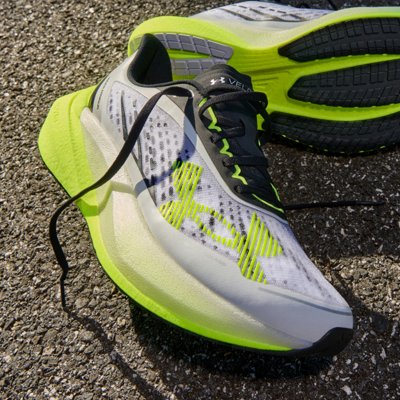
Shoes: You’ll want lightweight, durable, moisture-wicking shoes that allow for freedom of movement with plenty of support. The cushioning, traction, and breathability should be high quality.
Compression Gear: Ventilated, lightweight, moisture-wicking HeatGear® should keep you comfortable and performing well in a hot gym.
Socks: You don’t want your feet to get sweaty. A pair of lightweight, moisture-wicking, stretchy socks with odor control and mesh ventilation work well for any position.
The swingman is one of the most glamorous positions to play. Some of the greatest players in the NBA played swingman. If you want to play the swingman position, it’s best to learn all the skills necessary to be a good player.