

Quarterback in Flag Football: The Complete, Playable Guide
Flag football is a fast-paced, offensive-centric game that revolves around the quarterback. Because the rules for running in flag football are more restrictive than they are for regular football, passing is the biggest component of a flag football team’s offense. A flag football quarterback must be an effective—if not great passing quarterback, for the team to be successful. In regular football, many offenses rely on great passers, but coaches can design strategies around the strength of their team, which might include running the football.

How the Flag Football Position Differs from a Tackle QB
One of the biggest differences between regular football and flag football is contact. The absence of tackling in flag football changes the way the quarterback must play. Below is a look at some differences between tackle and flag football, which impact quarterback play.
- Tackling: In flag football, there’s no tackling. Defenders pull a flag out of the ball carrier’s belt to end a play. In regular football, the play stops when the ball carrier is either tackled or at least 1 knee touches the ground. Quarterbacks in tackle football are vulnerable to injuries because they can be defenseless if they’re sacked. Flag football quarterbacks can operate with a greater sense of security since they know they won’t be tossed to the ground.
- Rushing the Passer: A quarterback in tackle football must rely on their offensive line for protection, which allows them to throw the football. In flag football, the offensive line can’t block the defenders. The line can try to shield the quarterback by getting in the way of a rusher. Both lines have a job to do but a tackle football quarterback is much more reliant on a good line to get enough time to get a pass off than a flag football quarterback is.
- Duration: In regular football, the quarterback has unlimited time to finish a play. In flag football, the play ends 7 seconds after the snap. Quarterbacks generally release their passes between 2 and 3 seconds after the snap in regular football. In flag football, the quarterback can take longer to throw the football.
- Rushing Rules: Defensive players can rush the quarterback in flag football, but they must declare their intentions, and they’re required to start 7 yards beyond the line of scrimmage. In regular football, any player can rush the quarterback without declaring their intention and they can start on the line of scrimmage. Because the rush is more intense in regular football, quarterbacks must release the ball quicker.
- Running: Flag football quarterbacks can’t run the football unless the ball has been handed off to them and they can’t lateral the football, while quarterbacks in tackle football can run anytime, and they can lateral the football.
Quarterbacks in regular football have more freedom to make different plays but there’s more pressure from the defense.
Important Skills
Flag football quarterbacks have the same expectations that a football quarterback has: to be the most impactful player on offense and the team leader. Below are some key traits a flag football quarterback needs to have.
- Accurate Passer: Since most of the offensive movement in flag football is done via passing, a quarterback must be able to throw to their receivers on target.
- Mobility: Flag football quarterbacks must be elusive enough to escape a rush from the defense and still be able to pass the ball with precision to their receivers.
- Strong Arm: The quarterback must have a strong arm to throw the football on deep routes. The quarterback should also have a quick release, which’ll help them avoid the pass rush. Sometimes, the quarterback might have to use a different arm angle to throw the football because of a rush.
- Field Awareness: The quarterback should know where their players are on the field atall times. Often, they’ll have to make several defensive reads when passing to their wide receivers. The initial receiver might not be open, which means the quarterback has to quickly move on to see if the next receiver is open. Sometimes, there might be 3 or 4 reads. The quarterback also needs to be able to sense if the defensive rush is coming to their blind side. The blind side for a QB, which is the side the quarterback can’t see, is from the right side for a right-handed quarterback.
- Footwork: A flag football quarterback should know the 3- 5-, and 7- step dropbacks as well as how to pivot and get force on the football quickly after coming to a stop.
- Decision Making: The quarterback must make quick reads on where and who the ball is going to be thrown to.
- Leadership: The quarterback is essentially the manager of the team. They must motivate players and communicate the plays to them. When teams are behind or the circumstances are difficult, the quarterback must try to lift morale. The quarterback also must keep their composure under pressure.
Essential Flag Football Gear
Every player needs to have the right accessories to optimize their on-the-field performance. Below is a list of some necessary gear for flag football players.
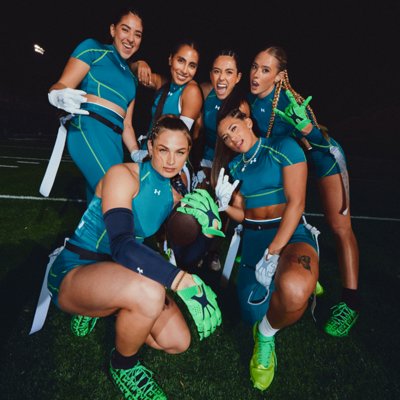
- Belts and Flags: Players need a belt with flags attached to it, usually using a hook and loop fastener. Most leagues require 3 flags:1 on the back and 1 on each hip.
- Cleats: Flag football players generally don’t wear metal cleats but a grippy pair of molded cleats will help your performance. The size of your cleats could depend on whether you play indoors or outdoors. Ankle, mid-cut, or high-top cleats are a matter of preference. Because there’s no contact, most players prefer lightweight ankle or mid-cut cleats, which help them maintain their speed.
- Performance Shirts: Flag football is faster than regular football and it’s usually played outside in the spring and fall months. Indoor flag football is more common in the winter. A moisture-wicking , comfortable, lightweight shirt is helpful.
- Compression Layers or Baselayers : Almost all competitive football players wear baselayers to avoid chafing and to stay dry. Baselayers should be lightweight, form fitting, and moisture wicking.
- Athletic Shorts: Flag football players almost always wear shorts. Most flag football leagues don’t allow shorts with pockets for safety reasons.
The quarterback is the most scrutinized position in flag football. It’s also the most glamorous and it comes with the most responsibilities. The skill sets used in both flag and regular football are similar, and quarterbacks can play in both leagues.


