





Mastering the Striker Position in Soccer
To be a good striker in soccer, you need to thrive under the pressure and responsibility that comes with playing one of the most high-profile positions on the team. Not only are you expected to shoulder a large portion of the offensive responsibilities, but you also must be a good ball handler who can set up your teammates for scoring opportunities. Strikers are often the face of the team, talking with the media when their team wins or loses. It can be a glamorous position but it’s not easy. Below is a complete description of a striker.
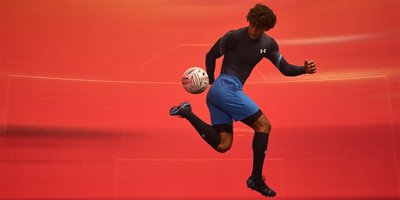
What is a Striker Position?
The primary job of a striker is to score goals. However, the complexities of the role of a striker go beyond scoring goals. Their role is to be the center of the offense. They need to know how to pass, hold up play, and attack in the right situations. Strikers need to have a deep understanding of where their teammates are on the field. Below is a description of 5 important skills for strikers.
- Hold Up Play: This essentially means controlling the soccer ball so you can get your teammates involved in the offense. A good striker knows how to use their body to keep the ball away from the defense. This technique buys the striker time to allow their teammates to get in position to receive a pass. It also creates options for the striker, who might have several places to pass the ball.
- Shooting Ability: Since the main job of a striker is to score, they must know how to find creases in the defense to get their shots off. Strikers need to have a powerful leg that will help them score from a distance as well as shots from close and medium range. A striker is also typically the go-to person for a penalty kick. They need to be able to regularly finish penalty kicks.
- Movement & Positioning: A striker must have awareness of where they should be on the field in relationship to their teammates. This helps them facilitate the offense and put other players in position to attack.
- Physicality: A striker needs to be strong enough to fend off defenders who are trying to steal the ball. They need to be able to keep their balance and stay in position to make passes to their teammates when they’re being swarmed by the defense. Strikers should also have a high level of stamina to help sustain the bursts of movement they need to be in attack mode.
- Presser: A striker is usually the first defender on a change of possessions. The striker’s job is to press the opposing team’s offense, forcing them to get the ball out of the middle of the field and to the sidelines, where their teammates can try to trap their opponents. A good striker can pressure an opponent into making bad passes.
Common Soccer Formations & the Striker’s Role
The role of the striker can take on different forms, depending on the offense you're running. A striker can be more of a facilitator, decoy, or attacker in various situations. Below is a description of a striker’s role in different offenses.
- Striker in a 4-4-2: One of the advantages of a 4-4-2 is that the ball doesn’t necessarily have to go through the midfield to get to the striker. One of the backs can send it directly to the striker in certain situations. In this formation, the striker needs to be able to act quickly and decisively when receiving the ball. Because there are 2 strikers, one of them can be more of an attacker while the other could be more of a play maker, setting up their teammates with passes that could lead to shots.
- Lone Striker in a 4-4-3: The 4-4-3 ispopular with teams that have skilled midfielders who can rotate in and help the lone striker attack the goals. The advantage of this formation is its versatility. In certain situations, the defenders can help attack on the sidelines. The only striker in the 4-4-3 must be good at holding the ball for their teammates and at pressing since they’re the first point of contact on defense.
- The False Nine: The striker in the false nine tries to link the defense and the offense. To do this, the striker will come out deeper for the ball to the midfield area. In this role, the striker assumes more playmaking responsibilities. They’ll have to rely on the forwards more for attacking the goal. A striker can play the false nine position at strategic parts of the game and then assume a more traditional striker role depending on the situation. The false nine is a tactic where the striker’s motives are to create confusion with the defense.
- Dual Strikers in a 3-5-2: The 3-5-2 is an attacking offense that works well with a stronger, more physical striker on one side and a quicker, more mobile player on the other side. The strikers work together to create scoring opportunities. The bigger striker handles the ball, holds up the defense, and works on creating space for their teammates. The role of the faster striker is to primarily create their own shots and attack the goal. The combination of the 2 strikers can create extra pressure on the defense.
Types of Strikers & Their Playing Styles
Teams must adapt their playing style to the strength of their strikers. In some situations, you need 2 strikers to make sure you can attack, set up your teammates for scoring opportunities, and press. Below are descriptions of 3 different types of strikers.
- Target Striker: A target striker generally is the second attacker when a team uses 2 strikers. Their job is to hold up the defense and create scoring opportunities for their teammates. Their success is predicated more on their physicality and their skill at creating space for their teammates.
- Poacher: Poachers have a knack for getting to balls that are close to the goal and punching them in for scores. They know how to find open creases, where they can create scoring opportunities. Poachers aren’t necessarily great passers but they’re good at finishing. They are often good at scoring off of rebounds.
- Complete Forward: A complete forward is a striker who’s skilled at passing, scoring, pressing, and holding up the defense. They have it all. They're strong, fast, and they’ve mastered every quality a striker needs to be successful.
The striker position will always be one of the most important in soccer. It takes a combination of intelligence, skill, and physical attributes that only the best players possess to master it.


