



Training Shoes vs. Running Shoes: Which One Should You Wear?
Wearing the right shoes is key to making every workout count. Whether taking the first steps toward a 5K, sweating through the final minutes of a high-intensity interval training (HIIT) session, or getting one or two extra reps during a lift, your shoes can help you reach peak performance. While they might seem similar at first glance, there are significant differences between training and running shoes. Choosing the type of shoe that best fits your fitness regimen and goals will help you perform best. Let’s break down the differences between training and running shoes, choosing your ideal pair, and how athletes use them depending on the workout.
The Features That Set Training and Running Shoes Apart
As you decide on the best shoes to carry you toward your running or training goals, there are several key features to consider:
Cushioning and Heel Drop: For running shoes, cushioning goes from plush to moderate and often features a unique blend of foam materials. The amount of cushioning creates a stack height, which can range from 9mm to upwards of 40mm. Responsive, lightweight foam is designed to absorb shock and protect your legs from the repetitive impact of each stride, especially during workouts on hard surfaces like concrete and pavement. It also helps you endure long distances and achieve faster speeds thanks to energy return. Meanwhile, the heel drop protects your heel and propels you forward, which is why the drop in running shoes is typically higher, from 6–12mm. Most training shoes are designed to have reduced cushioning and heel drop but greater support on the sides, which creates more stability. This kind of minimalist build often leads to more stability and balance when doing strength training, calisthenics, or plyometric moves like jump squats and skater jumps. The drawback is that if you’re cross-training with running, you won’t feel as much shock absorption and energy return.
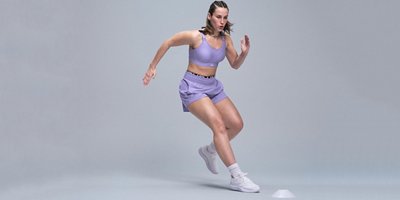
Midsole Flexibility & Forefoot: If you’ve ever seen a video review of a running shoe, you’ve likely seen the person bend the shoe to show how much flex lies in the midsole. This flex pushes you forward and facilitates a smooth heel-to-toe transition with the forefoot. But running midsoles are typically less flexible than training midsoles since they’re focused mainly on one direction—forward. Training shoes feature midsoles designed to support multiple movements and directions. You can run forward, of course, but dynamic flexibility is ideal for cross-training and HIIT, enabling you to jump up, shuffle side to side, or tiptoe backwards more easily. Less cushioning also means the midsole will help keep you stable as you’re picking up weights or doing agility drills.
No matter the type of shoe or exercise it’s used for, arch support should align with your arch shape—whether that’s neutral, low, or high—for proper weight distribution and comfort.
Carbon Fiber: Carbon fiber or nylon plates are another factor to consider. Carbon plate technology is designed to provide energy return and propulsion, making the shoes well-suited for speed training and racing.
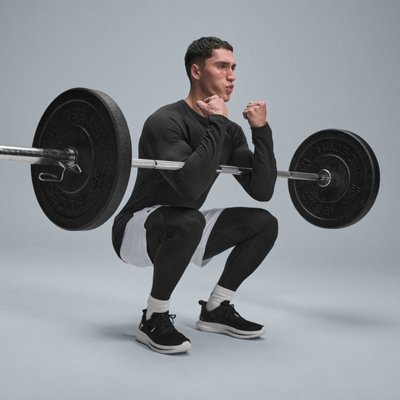
Outsole Traction: Running shoes often feature lightweight, rubber outsoles with grooves and shallow indents made for straight-ahead traction. Most outsoles are geared toward road running and track workouts, but some patterns are for trail running or harsh, wet conditions. The outsoles on running sneakers are designed for efficiency and speed versus training shoes, which are flatter and built to offer more all-around grip. These kinds of outsoles help you stay steady and grounded during lifts, such as barbell squats, deadlifts, or bent-over rows. They also have more rubber and are designed to better handle sudden bursts of movement, such as pushing a heavy sled across turf or pivoting on a court.
Fit: To start, make sure you know your current shoe size. Sometimes our feet grow! But the way your shoes fit goes beyond just size. The toe box should be big enough that your toes are comfortable and have space to wiggle, but not so big that they slide around during workouts. Across running and training shoes, the heel hold and width should match the shape of your foot and feel secure without squeezing.
An Athlete’s Guide to Choosing the Right Shoe
It’s tough to find a one-size-fits-all sneaker that covers everything from long runs to weightlifting. Across the board, running shoes are crafted for one activity: consistent forward motion. But depending on the distance and intensity level, you may seek a tailored combination of specs.
Daily Trainers: Daily trainers are designed for easy runs and long runs. (Long runs are half-marathons, marathons, and other distances longer than your normal daily mileage.) In these settings, it’s important to prioritize comfort, efficiency, and durability. Your preferred running shoes will likely offer good cushioning and a snug fit; a heel drop and midsole makeup that complements your running form and propels you forward while also creating some control; and an upper and outsole that can handle different conditions and repetitive impact.
Stability Shoes: One factor to consider is how your foot hits the ground. Is it neutral, underpronated, or overpronated? If you overpronate, you could benefit from stability shoes. Stability shoes give you support in the midsole, which supports a healthier stride for runners who overpronate.
Super Shoes: Super shoes can be designed with carbon plates along the midsole, giving runners an extraordinary sense of propulsion. These are best for long and mid-distance races, like marathons.
Gym Workouts: When discussing training shoes vs. running shoes, versatility and stability are crucial to performance in the gym. During HIIT, athletes could be doing any exercise from burpees and lunges to sled pulls and medicine ball slams. Their gym shoes should offer flexibility and support at multiple angles along with outsoles that provide maximum grip and prevent slipping.
Strength Training: Strength training involves more weight and less dynamic movement. Training shoes with moderate to low cushioning, a smaller heel drop, and a firm midsole provide a balanced foundation for lifts, such as barbell squats and deadlifts. In plyometrics, your sneakers should be responsive and equipped to handle many explosive jumps while absorbing some shock and protecting your knees and ankles.
Hybrid Athletes: Hybrid athletes are a growing group that like to split their time between cardio and strength training. If you consider yourself a hybrid athlete or are interested in becoming one, you’ll want to try training or cross-training shoes, which can help you bounce between workouts with ease. Added ankle support will be helpful as you transition from treadmill sprints and lateral shuffles to Bulgarian split squats. Your performance will also benefit from an upper made of supportive and durable material, a more stable midsole and flexible forefoot, and a versatile outsole that can adapt to various surfaces.
It’s a rewarding feeling when you finally discover the running or training shoes that help you perform your best. But the harsh reality is that you might not get it right on the first or second try. As you explore different designs and continue to update your fitness goals, the most important thing is to gain an understanding of the specs that make you feel strong, comfortable, and confident.